Do you take a picture of everything? Food comes, take a photo. “Camera eats first” as my father-in-law says. Turn a corner while hiking, take a photo. Our phones make snapping a shot so easy. But I wonder if we are deluding ourselves and wasting time.
I store my photos on a custom iMac I built. Over 100,000 photos and videos take up 800GB and very infrequently do I view them. But they sit there waiting for me just like Woody waits for Andy to return and play with him.
Digital Storage Units
With digital storage costing so little we rent it without thought. Even I’m on Apple’s $0.99/month for a reason I’m not so sure of. The quantity of data increases so fast as do the sizes of our hard drives. But so little of it is utilized that I wonder if we need to rethink what is filling the space up.
Let’s consider what evidence of childhood there is from various generations.
Your grandparents: maybe one black and white photo of their childhood
Your parents: a few color photos of their childhood
You: lots of photos and a few videos of your childhood
Your kids: tons of photos and videos of their childhood
Your grandkids: every moment captured in 8K with geotags and biometric readings of their childhood
Did having no camera to document his every action make my grandpa’s childhood less memorable or worse? No, and likely it did the opposite as he was free to be present in the moment. Meanwhile my children have already picked up on my phone usage and will take dozens of photos of random objects. I’m not interested in looking at the objects and even if there were tons of videos of my grandpa’s childhood I doubt I’d watch more than an hour.
There’s a scene in The Secret Life of Walter Mitty where Sean Penn’s character who is a famous photographer is asked by Ben Stiller’s character when is he going to get the photo he has been waiting to capture.
Sometimes I don't. If I like a moment, for me, personally, I don't like to have the distraction of the camera. I just want to stay in it.
So why are we taking a photo of everything and what do we plan on doing with it? Personally, I think it a combination of FOMO (fear of missing out) and I share, therefore I am. When you can capture everything, the fear of missing out means you fear not capturing something. And for what reason do you want to capture it? To share. Maybe with just yourself, but often it is to curate your photos and select the perfect one. It’s tough, and if this is you, you’ll have to search deep to figure out the why behind your behavior. It’s not necessarily bad, but like all the ways you use your time, go into it with your eyes open. Maybe you’ll find you don’t take enough snapshots of your life.
Photo-taking Impairment Effect
The irony of taking a photo of everything in order to remember it is that we are less likely to remember it. This phenomenon is called the photo-taking impairment effect and has been observed in multiple studies. One theory is that by capturing the photo we are offloading it from our memory to the camera’s. This makes us comfortable forgetting it. In attempt of memorializing the moment in our memory we end up doing the opposite.
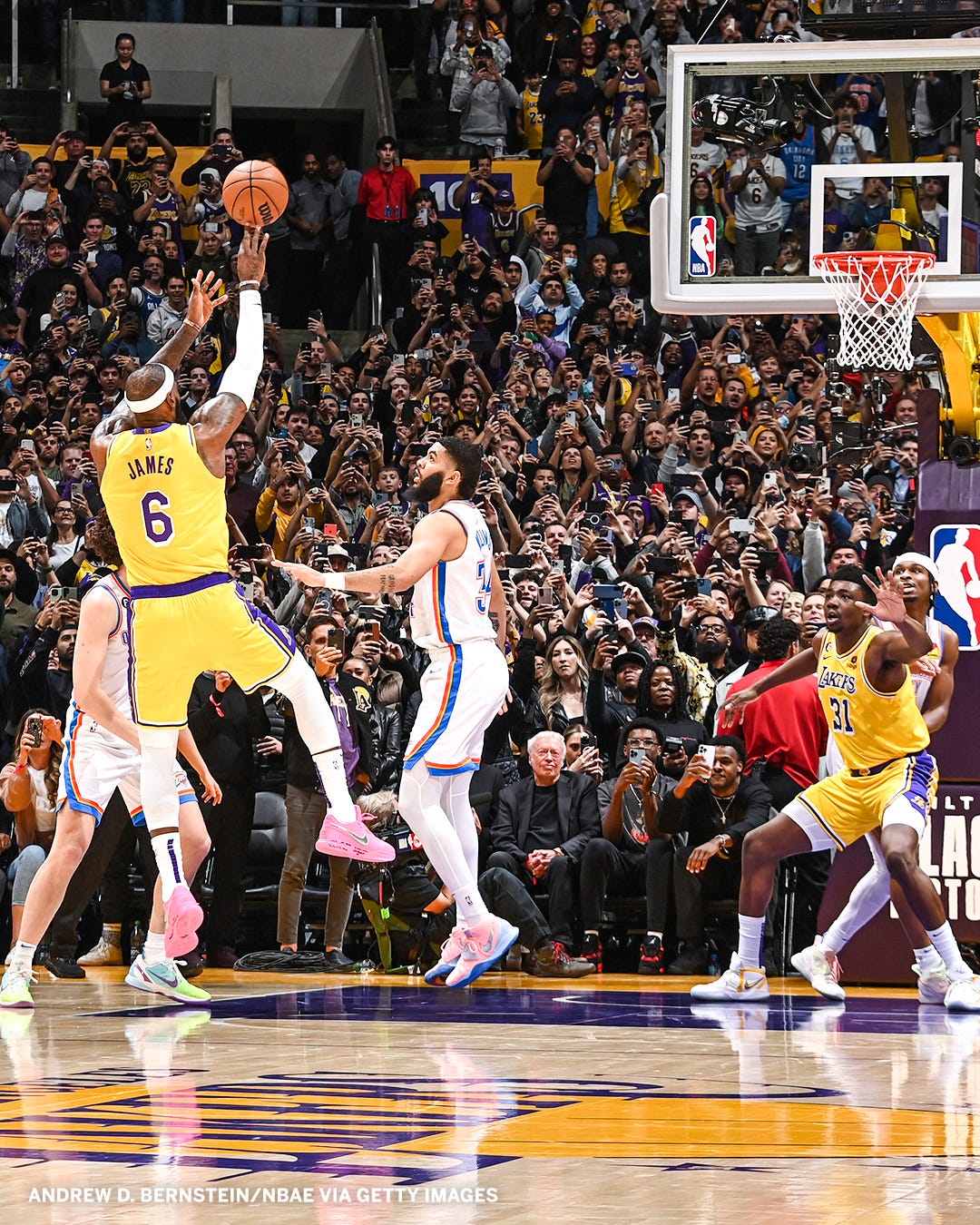
Here are some examples where people love to capture the moment. In the picture below we have Lebron James taking the shot that put him ahead as the all-time NBA top scorer. Look at how many people have their phones out capturing the moment. It’s truly amazing. Yet in the front row we have Phil Knight, founder of Nike and one of the top 100 richest people on the planet with no phone out just enjoying the moment.
Another example is at the Louvre. If you go you will almost certainly see the Mona Lisa. It is the must-see attraction. Yet, so many people want to take a picture and I’m not sure why because there are so many better pictures of it online to reference. But alas, our camera is like a Pokédex and we have to capture all our experiences in it. In contrast is the Sistine Chapel where no photographs are permitted. There everyone is looking in awe with heads upturned to the ceiling fresco. I much preferred that atmosphere of awe even though I don’t have a picture to share with you of it.
A final example comes from my high school experience. I went to a lot of concerts and have some videos of them. The quality is horrendously bad. It was often dark so it is hard to see the band and the sound quality is terrible as it was the early 2000s when I was using a lackluster recording device. So maybe next time you see fireworks just enjoy them and keep your phone holstered.
What Now?
Should you go through all your photos and delete all the duplicates and ones you don’t like? No. Don’t waste your time. In fact, AI is getting so good I’m sure it can do it all for you now or pretty soon.
But what I’m wrong? What if sometime in the future having all these photos ends up being a source of value? Well, if my AI doctor really wants to know every meal I had in my life then I guess I won’t get the full level of service. But AI is about extrapolating, so I think it will figure it out. The future is uncertain so we are bound to get some things wrong, but I’d rather live in the present enjoying my food rather than the camera doing so for me. I don’t take photos of food. If something is so spectacular then I’ll order another one and take a picture.
You have to assess the balance of capturing memories in your mind and capturing memories that you would like to replay.
I do take photos and videos of my children, but I try not to overdo it because then I’m more distracted and they are as well. I already have hours of video of them and I doubt we will ever sit down to watch it all.
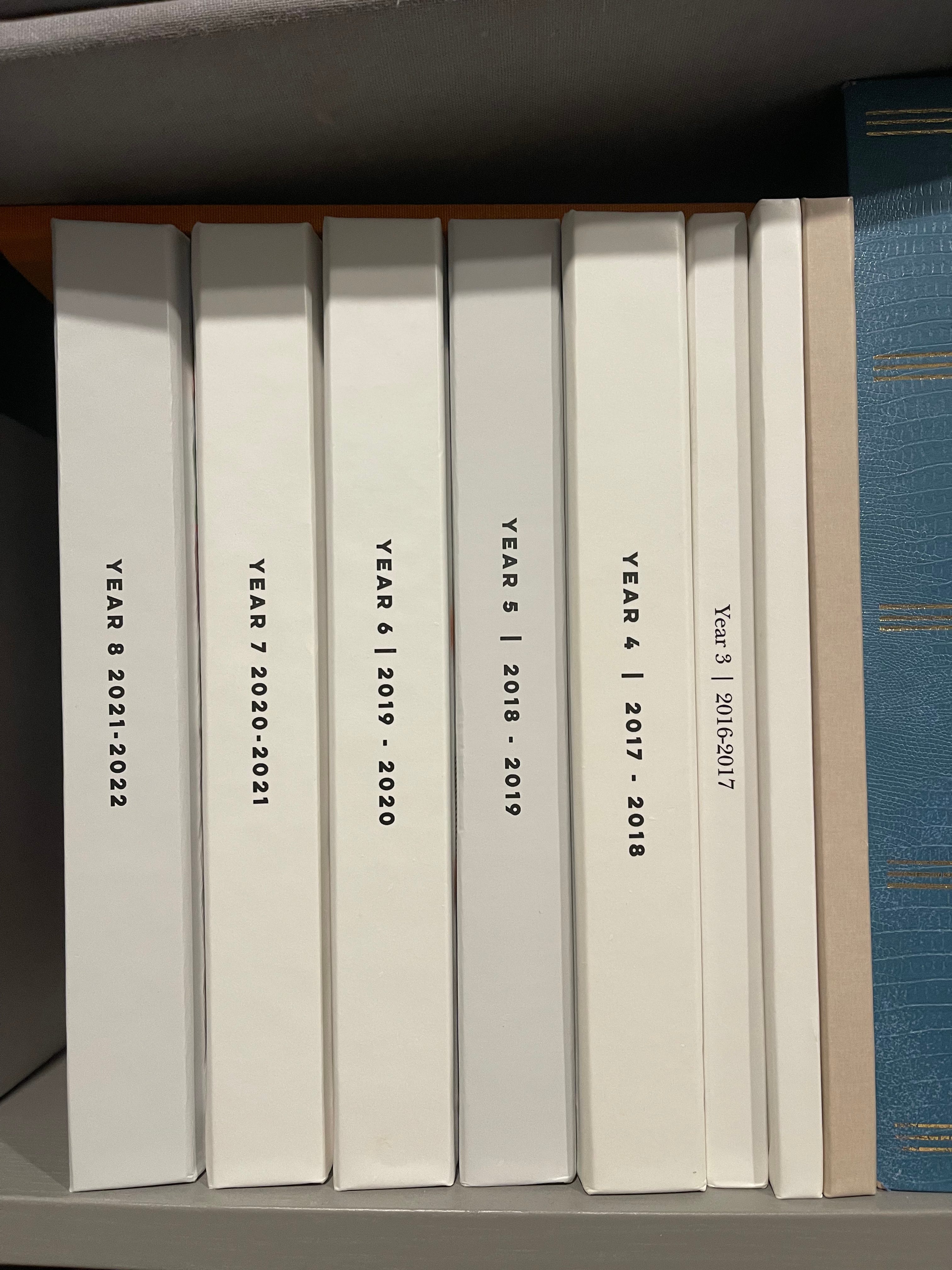
Each person will have to come up with their own way of doing things. What we did was create yearbooks annually. Each year we review our photos and put them in a book. We write the stories of what we were doing and then print the book. Having a tangible book allows us to look over it and also bring it to family functions where we can share with others. For us this is a good balance. Additionally, these books start to add up. Your digital storage locker is weightless, but these yearbooks are heavy and taking up space. To me, it’s physical reminder of the memories and the time cost it took to capture them.