

In the movie Fight Club, Edward Norton’s character says “On a long enough timeline the survival rate for everyone drops to zero.” And what is life without death? We know it will end, so let’s make the most of it. Because time is the measuring stick for our finite lifespans.
It’s easy to measure money. Everything has a price tag, you have a bank account, your Robinhood portfolio tells you how much your investments are worth every second. But time we are less accustomed to measuring. Sure, we stare at the clock wondering how many minutes late we should stay in our current meeting while the next has already started, but we don’t quantify our time very often. But now with our new metrics we can quantify and optimize!
In a previous article I ended saying you need to identify your constraints so you can better grasp what's holding you in place. Now I will provide a framework to start adjusting those constraints so you can spend more time doing what you want.
Identify your constraints, quantify them, figure out how to optimize them, and then repeat after you have some data.
Identity
Rather than directly identifying what your constraints are it may be easier to think of things you would like to accomplish which you haven’t yet. Maybe it is a multi-day hike with your spouse, owning a sports car, or eating dinner together as a family daily. Once you think of a goal ask why can’t I do that now? Those reasons are your constraints. You can’t do the hike because you aren’t in shape because you haven’t spent the time to do so because you have lost it to other activities. You don’t own a sports car because you have other bills which support your lifestyle. You don’t eat dinner as a family because you work until 7PM and only have time to tuck in your kids. You’ve now identified some constraints in your life.
Quantify
The next step is to quantify your constraints. Time will always be one of your constraints because if you had forever you could do everything. Unfortunately, you’ll need to make tradeoffs. To do your hike you needed time to get in shape. So you need to see where your time is going. Look at your calendar. Check your phone to see how many hours you spend on which apps. You can get as detailed as you wish. The total should add up to 24 hours per day. If money is a constraint see where you are spending it. Does it align with what you would like it to?
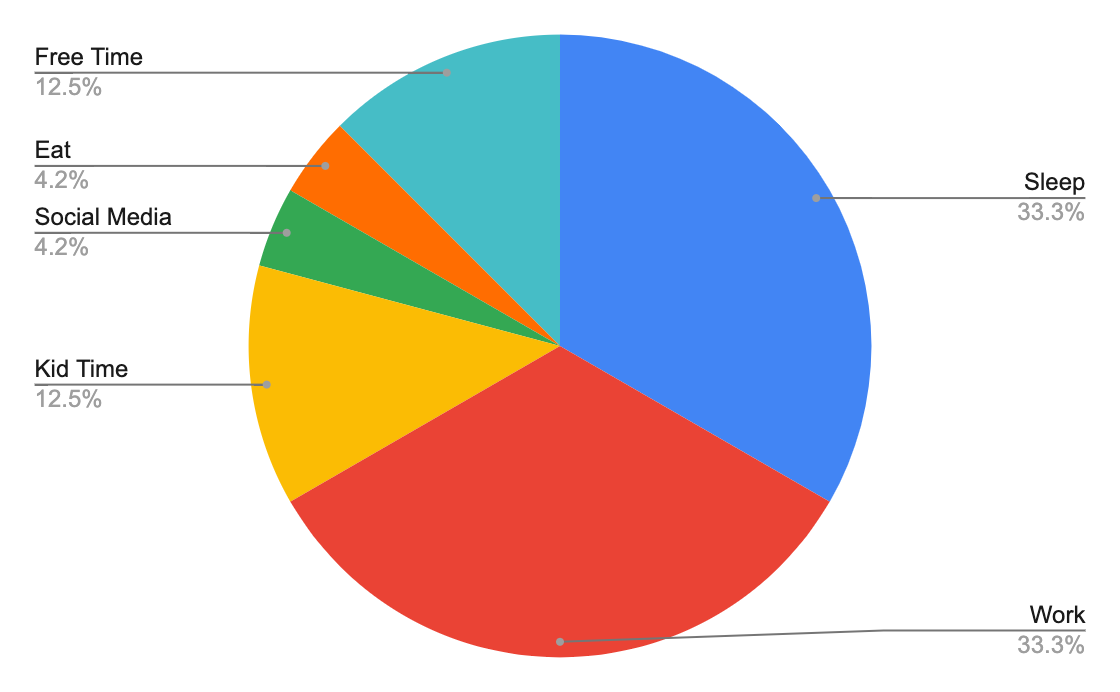
Most of the time you will have multiple constraints stopping you from completing a goal. In order to have dinner with your family you need to finish work by 6PM. Is the constraint you have to work until 7PM or that you have to work 8 hours or that you need a stable job with healthcare or all of the above?
Optimize
Now to optimize your time you will have to take from one area to add to another. After checking your phone you realized there are are spending two hours on social media a day which you think you could limit to one and use the hour saved to prepare for your hike. In order to stick to it you a one hour calendar block to exercise and get in shape.
You decided having dinner with your family is so important that you ask your employer to finish by 6PM and they say sure if you come in an hour earlier. You say you can’t because you have to drop off the kids at school, but you could work an hour after they sleep. They agree. Being creative and flexible will allow for you to relax more constraints to get closer to what you want.
Repeat
Maybe getting in shape wasn’t as easy as an hour and you need to adjust. Maybe working an hour late at night hurts your sleep quality. Over time you’ll have a sense of what isn’t working and what other accomplishments you want to get to and you’ll need to repeat the steps. Life is always changing and so will your priorities. Life is a choose your own adventure, so make the most of it.